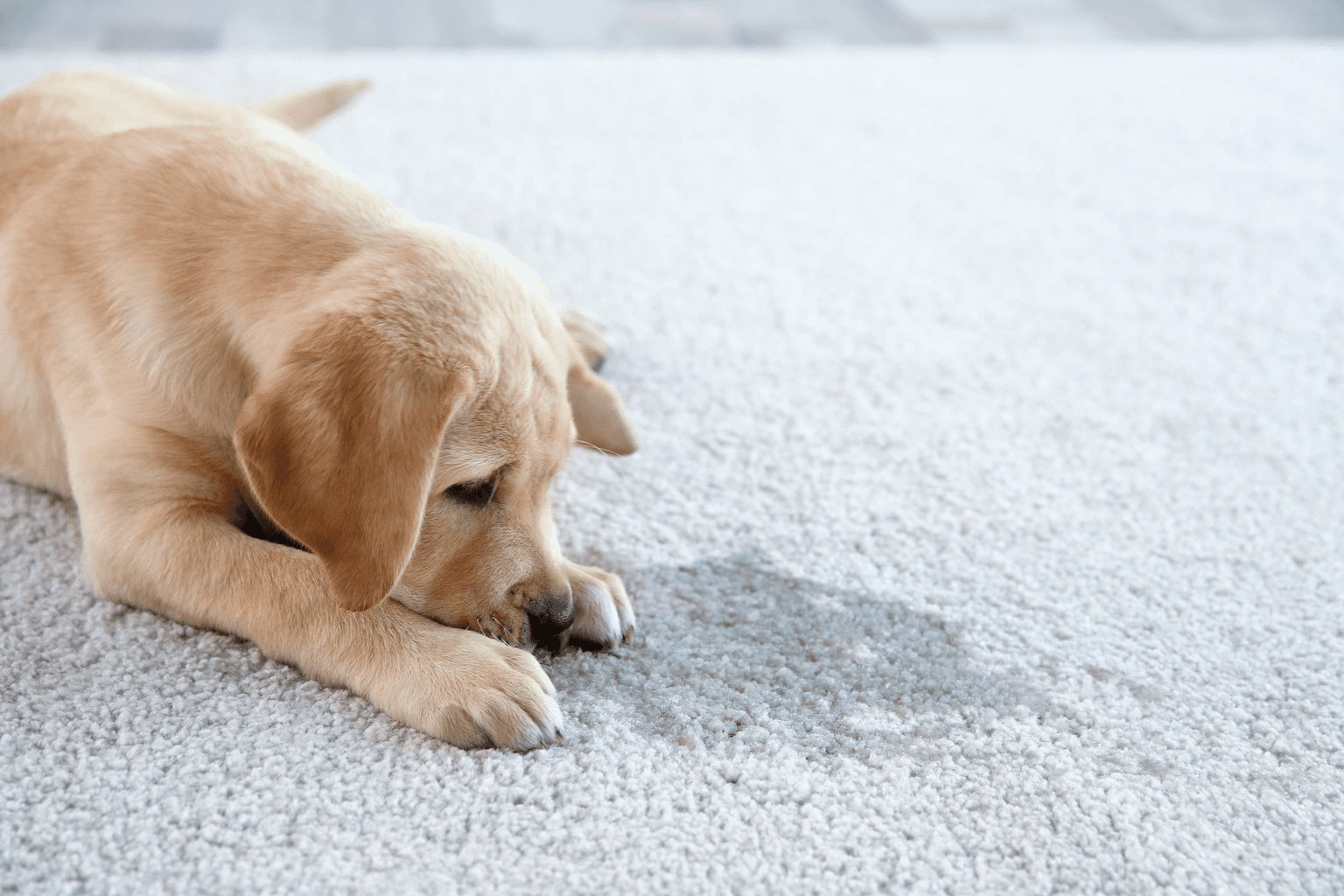
Put down the spray bottle for a minute and get on your knees. Press your nose close to the carpet where the dog had the accident last month, then do the same three feet away. If the first spot still smells sharp, the problem has moved down into the pad, and no spray bottle on earth will get down there.
That's the most common call we get from Katy pet owners. Somebody cleaned the spot right away, it looked fine, and then on a damp September afternoon with the AC cycling off, the whole room smelled like a kennel again. Moisture in the air rehydrates the dried urine salts sitting in the cushion underneath, and the bacteria feeding on them start up again. Gulf Coast humidity is very good at this.
How we find it
Urine spreads in a cone shape under the carpet, often two or three times wider than the stain you can see, and old spots have usually faded into the carpet color. So the visit starts with the lights low and a UV light. Every spot the light picks up gets marked, including the ones behind the sofa and in the closet corner the cat favors. You'll see the map before we treat anything, and the price comes with it.
What the treatment does
The enzyme goes down first
We pre-treat every marked area with a live enzyme. That word matters. A live enzyme product carries bacteria that digest the uric acid and the organic matter in the urine. It goes on heavy enough to soak through the carpet backing and into the pad, where the source is.
Then the carpet gets cleaned
After the enzyme has had time to work, the carpet gets our regular low-moisture cleaning, which pulls up soil, dander, and loosened residue without dumping water into the subfloor. Stubborn stains get a second, targeted round with an enzyme booster.
Odor neutralizing, never perfume
The deodorizer we use neutralizes odor molecules. It doesn't cover them with a scent, which is why the room smells like nothing afterward. We think that's the right result. A carpet that smells like fake lavender is still hiding something.
Final pass and drying
A light rinse picks up whatever residue the treatment left behind, and we walk the areas with you before packing up. The carpet is dry and the pets can come back in the same day.
Where this gets used
Wall-to-wall carpet is most of it. The same treatment works on area and oriental rugs, on sofa cushions and dog beds, and on mattresses where a puppy or an older pet has had trouble at night. We also handle the other odors and stains that come up in a busy house: smoke odor, a musty smell from a damp closet, food, grease, and oil, and the occasional latex paint drip. Paint is hit or miss once it has dried, and we'll say so on the walkthrough.
Mattresses come up more than people expect. An older dog who can't hold it through the night, or a new puppy in a kid's bed, can soak a mattress in one go. We treat the mattress with the same enzyme and clean the surface, though a mattress that has been soaked repeatedly over years is usually past saving. Cats are their own category. Cat urine is more concentrated than dog urine, and a cat that has been marking the same wall edge for months will need the carpet tack strip area treated too.
For a deeper read on how urine behaves in carpet and padding, the people behind this pet urine removal guide have written up the details, including why some odors come back.
When an accident happens
What you do in the first ten minutes makes our job easier or harder. Blot the spot with plain white towels, standing on them to press the liquid up out of the carpet, and keep going until a fresh towel comes up nearly dry. Then rinse with a little cool water and blot again.
Skip the heat. A steam cleaner or hot water sets the proteins in urine and can lock the stain into the fiber. Skip the scented carpet powders too, since they just add a perfume layer over the problem and leave residue behind. And don't scrub hard. Scrubbing spreads the spot wider and frays the tips of the yarn.
If you have several pets or a pet that keeps going back to the same spots, call us sooner. Animals return to places that still smell like them, even faintly, so getting every marked spot fully treated is what breaks the habit.
The honest version
We can fix most pet odor problems without pulling up any carpet. Not every one, though. If a dog has used the same corner of a room for a year, the urine may have soaked through the pad and into the wood subfloor or the slab, and it can also break down the latex holding the carpet backing together. At that point the right fix is cutting out and replacing that section of pad, and sometimes treating the subfloor itself, which is a flooring job. We'll tell you if we see it.
Old stains are a similar story. The odor almost always goes. The yellow color sometimes doesn't, especially on light carpet where urine sat for months and changed the dye.
Getting it scheduled
Pet treatment is $25 off on our coupons page, and it pairs well with a whole-house carpet cleaning so the rest of the floor matches the treated spots. Homes with active pets usually do best on a cleaning every three to six months. Call 281-789-8998 any time, day or night, or book online. We serve Katy, Fulshear, Brookshire, and Sealy, and every treatment carries our 100% satisfaction guarantee.