
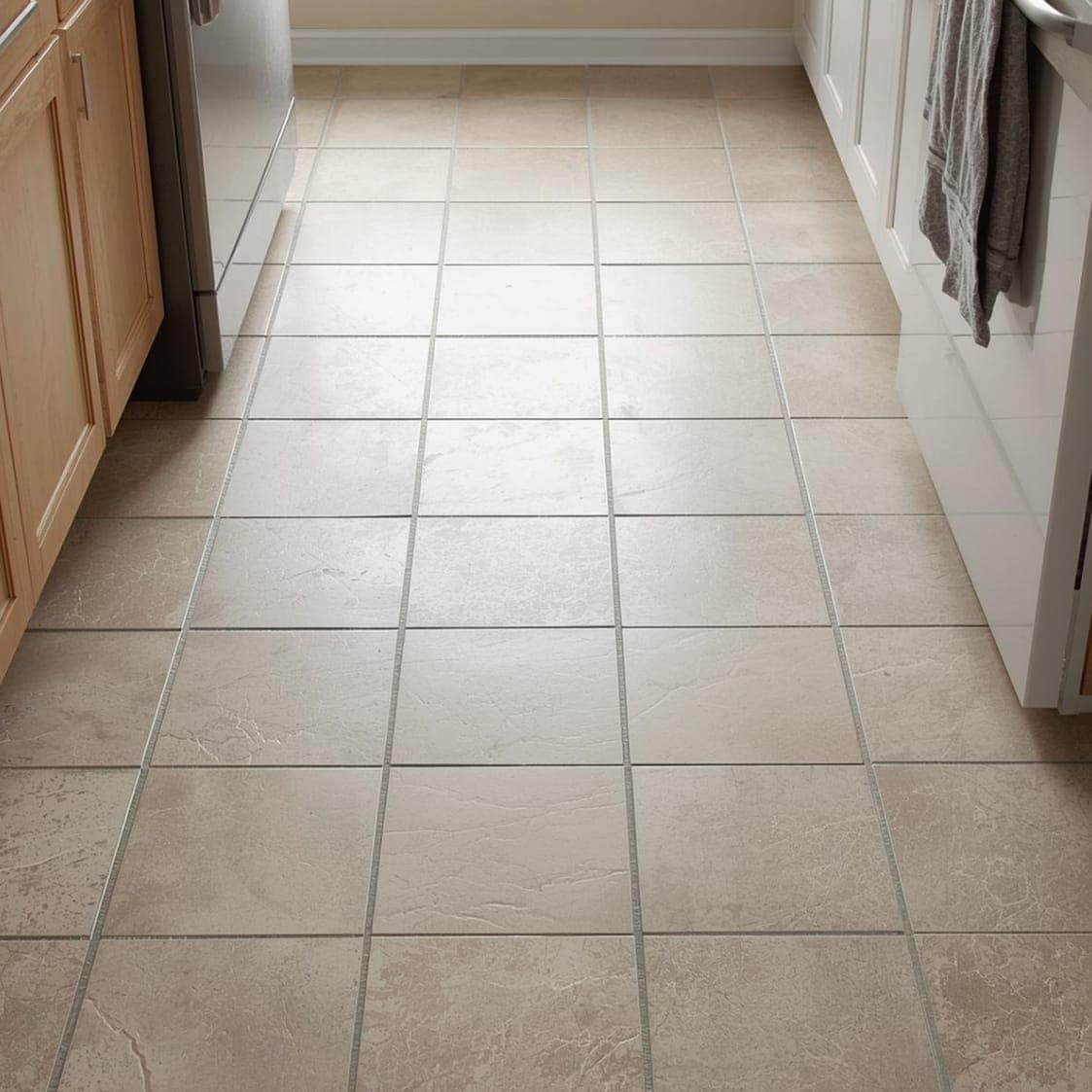
Mopping is the main reason grout turns gray. That surprises people, since mopping is the thing they do to keep it clean, but we see it in nearly every tiled kitchen we walk into.
The tile itself is rarely the problem. Glazed ceramic and porcelain have a hard, slick face, and dirt mostly sits on top where a mop can reach it. Grout is a different material. It's cement-based, rough, and full of tiny pores, and it sits a little lower than the tile around it. Think of every grout line as a shallow gutter made of a very fine sponge.
How the dirt actually gets in
Picture a normal week in a Katy kitchen. Shoes come in through the garage. The dog comes in from a yard that's mostly gumbo clay after a summer storm. Grease from the stovetop settles on the floor in a fine film nobody can see. A juice box tips over.
Then somebody mops. The mop picks up the loose dirt on the tile face and turns it into gray water. That water does what water does on an uneven surface: it runs downhill into the grout lines and soaks in. When it dries, the dirt stays behind inside the pores. Next week it happens again, a shade darker.
Two other things speed it up:
- Too much floor cleaner. Extra product leaves a tacky film that holds the next round of soil. If your tile feels slightly sticky under bare feet, that's what you're feeling.
- Dirty mop water. Once the bucket turns brown, you're painting the floor with it. Changing the water halfway through a big kitchen makes a visible difference.
Bathrooms add soap film and hard-water minerals to the mix. Entryways and laundry rooms collect the outdoor grit. The pattern is the same everywhere: the busiest path darkens first, and the grout along the wall stays close to its original color. If you scrub a six-inch section with a brush and it comes up two shades lighter than its neighbors, you're looking at buildup and the grout underneath is fine.
Problems we see most often
Dark, uneven grout is the big one. On a light grout, the walking path between the back door and the fridge can turn nearly brown while the corners stay beige.
Cloudy or hazy tile is usually product residue, not wear. So is a floor that looks dirty again two days after a careful mop.
Odor can come out of grout too, mostly in bathrooms near the toilet and in pet feeding areas, because the pores hold onto whatever soaks into them. And a floor carrying a slick film of residue loses some traction when it gets wet, which matters on a tile entry where kids come in dripping from the neighborhood pool.
What you can safely do at home
Sweep or vacuum before any water touches the floor. That one habit keeps dry grit from turning into mud in the grout lines.
Mop with a well-wrung microfiber pad and a small amount of a tile-safe cleaner, and let the floor dry fully afterward. Run a fan if it's a muggy day. Wipe kitchen grease spots when you see them; grease is the soil that grabs everything else.
Skip the bleach and the stiff wire brushes. Bleach can weaken grout and leave it blotchy, and hard scrubbing roughs up the surface so it collects dirt even faster. A baking soda paste on a toothbrush is fine for a small spot by the tub. For a whole kitchen, it's a weekend you won't get back, and the results rarely match across the room.
Put a mat at the garage door and another under the pet bowls. Clean underneath them often, since water collects there.
How our machine buffer method works
When the grout is past what a mop can fix, we bring a machine buffer. The technician looks at the floor with you first, notes the darkest lanes and any cracked or missing grout, and quotes the job before any cleaning starts.
A cleaning solution goes down to loosen the grease and soil. Then the buffer works across the floor, and its scrubbing action gets down into each joint and pulls the packed-in grime up out of the pores where it can be wiped and extracted. Hand brushes can't do that evenly across four hundred square feet; the machine does the whole floor at the same pressure, so the grout ends up one color again.
We clean tile and grout. We don't seal it, and we'll tell you so up front. Details are on our tile and grout cleaning service page, and if you want to go deeper on the method and what results look like on different floors, our sister site Tile Done Right covers it in detail.
Where cleaning stops: it can't fix grout that's crumbling, cracked, or stained by something that changed its color permanently, like a rust drip or a hair-dye spill. If we see that during the walk-through, we'll point it out before you spend anything.
How often to schedule it
Most Katy homes do well with a professional tile clean every year to eighteen months. Busy kitchens, homes with large dogs, and houses where the whole downstairs is tile tend to need it closer to once a year. A good test is to look at the grout along the baseboard and then at the grout in front of the sink. When the difference bothers you, it's time.
It also makes sense to book tile and carpet on the same visit. Dirt moves between them, especially in open floor plans where the tile downstairs feeds the carpeted stairs.
Our $45 off tile coupon is on the coupons page. Pick a time that works on the scheduler, and mention which rooms are tiled so the crew brings the buffer.