Two thousand. That's roughly how many times a family of four sits down on the living room sofa in a year if everyone uses it once or twice a day, and none of those sit-downs does any visible damage on its own. Furniture fabric wears out the way a hiking trail does. Nothing happens, nothing happens, and then one day there's a path.
When we clean upholstery in Katy homes, we see the same handful of causes over and over. Knowing which one is at work on your couch tells you whether cleaning will help.
Skin oil is the quiet one
Every time an arm rests on the armrest or a head leans back against the cushion, a little natural oil moves from skin and hair onto the fabric. On a summer evening in shorts, there's more of it. Oil soaks in. It wicks down into the fibers and spreads out, and it's sticky enough to hold whatever dust lands on it next.
This is why sofa arms and the top of the back cushion go dark first, often on a couch with no spills on it at all. It's also the cause cleaning reverses best. Lift the oil out and the color usually comes back close to the original.
Dust and grit work like fine sandpaper
Household dust settles on furniture all day, and Katy has pollen floating around for most of the year. When you sit down, you press that dust into the weave. Then you shift around, and the tiny particles rub against the fibers from the inside. Over months it scuffs the surface and makes the fabric look fuzzy and dull.
Vacuuming with an upholstery tool every week or two pulls out most of the loose grit before it gets a chance to grind.
Friction from how we actually sit
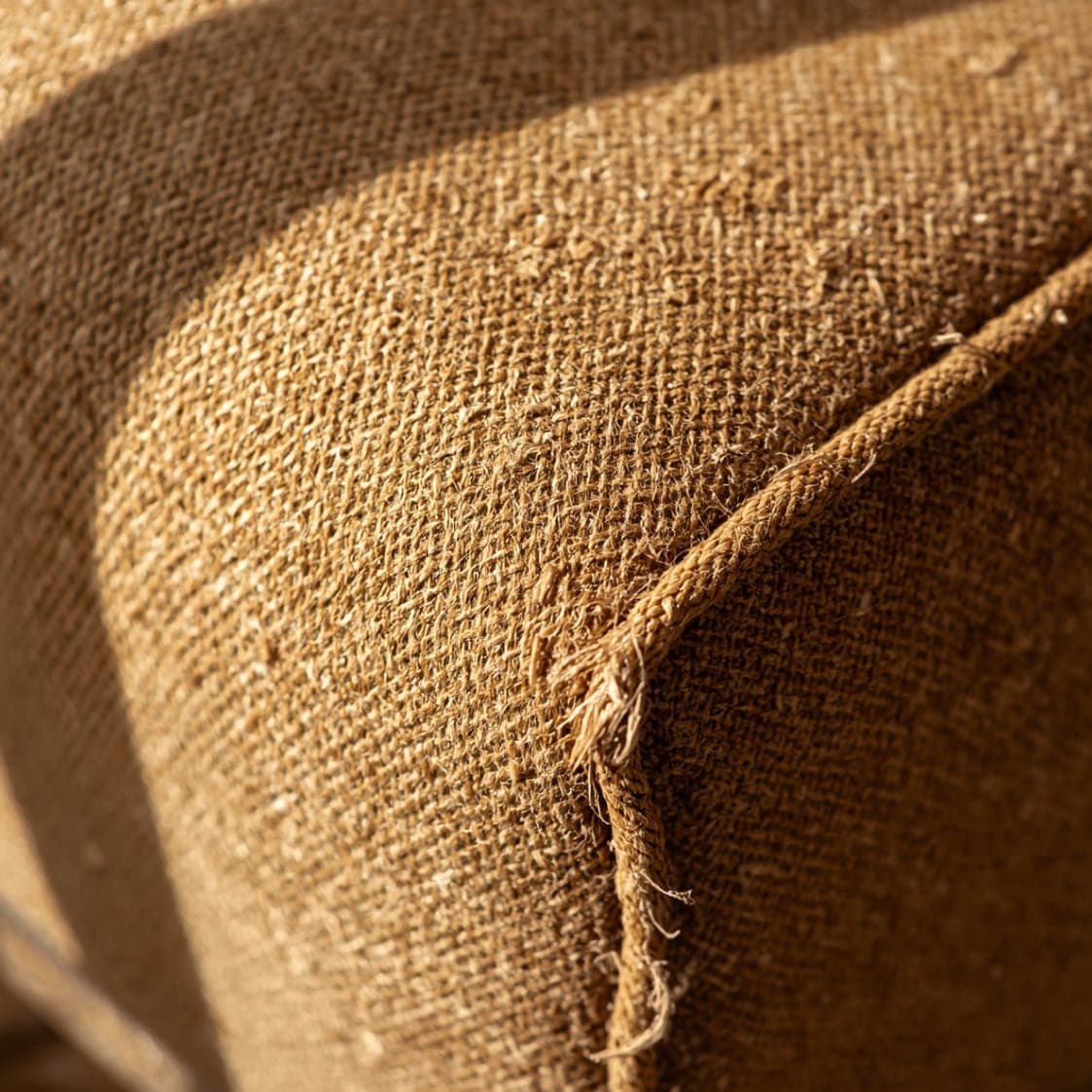
Sliding into a seat, sliding out, the same spot, every night. Friction is the one cause that's pure physical wear. It thins the fibers, flattens the pile on velvet and chenille, and can eventually pill or fray the fabric on the seat front. Rotating loose cushions spreads it out, but cleaning can't undo it. A worn seat front will look cleaner after we're done. It'll still look worn.
Pets add a layer of their own
Dogs and cats bring hair and dander along with their own oils, and they pick one spot and use it hard. Claws and turning circles add friction. A damp dog coming in after a summer storm puts moisture into the cushion, and over time that favorite corner starts to smell like the dog even when the dog is outside.
That smell is usually body oil and dander, which a good cleaning handles. An accident that soaked through to the foam is a separate problem and needs an odor treatment that reaches the cushion core.
Sun and moisture, the slow background damage
West-facing windows fade fabric, sometimes in a sharp line where the blind stops. That fading is permanent; no cleaning puts dye back. Turning the couch or closing the blinds in the late afternoon slows it down.
Moisture is the other background factor. Our air is damp much of the year, and fabric that gets wet from a spill or a too-wet home cleaning can stay damp long enough to smell stale. One of the worst things we see is a cushion scrubbed with a carpet shampoo and left soaked. The soap residue dries tacky, attracts dirt, and the spot ends up darker than before.
What upholstery cleaning can and can't do
It can take out the oil, the embedded dust, the pet dander and most food spills, and it can freshen a cushion that's started to smell. It can't repair thinned fibers, pilling, sun fading, or broken-down foam. We'll tell you which is which when we look at the piece.
We read the manufacturer's cleaning code before anything touches the fabric, keep the moisture light, and use no soap, so the fabric never dries sticky. The furniture cleaning service has the specifics. For a family sofa, every 12 to 18 months is a reasonable interval; homes with pets or small kids often want it yearly.
Ready to see how much of that dark arm is oil? Book a time on our online scheduler, and check the coupons page first for $25 off.