Same-Day Service Available!

Wool rugs bring warmth, texture, and character into a home, but they also need a more careful kind of cleaning. Here in Katy, Texas, we see wool rugs in living rooms, bedrooms, offices, dining spaces, and entryways where they handle daily foot traffic, dust, spills, pet messes, and everything else that comes with real family life. When a wool rug starts looking dull or picks up a stain, many homeowners want to clean it right away. The problem is that wool does not respond well to rough treatment. Too much water, the wrong product, hard scrubbing, or overly aggressive spot cleaning can lead to color movement, texture changes, shrinkage, or a rug that simply does not look the same afterward.
That is why area rug cleaning for wool should always start with caution. Wool is a natural fiber. It is durable in many ways, but it is also more sensitive than many synthetic rugs people may be used to cleaning at home. The IICRC notes that some stain-treatment methods, including certain oxidizing spotters, are not recommended for wool or other natural fibers without extensive testing for possible color loss. That is a good reminder that “stronger” is not always “better” when it comes to wool rug care.
Wool fibers are naturally absorbent, which means they can hold onto spills, oils, and residue if the wrong method is used. They can also react poorly to overwetting. A rushed cleaning attempt may leave the rug too damp, disturb the dyes, or create uneven texture once the fibers dry. This is one reason wool rug cleaning should feel controlled from start to finish. Blotting, testing, low-moisture methods, and patient drying usually protect the rug better than a fast, heavy-handed cleanup.
That careful mindset matches the way we think about cleaning in general. Safe-Dry’s brand approach is built around family-safe, hypoallergenic, soap-free cleaning without harsh chemicals, with low-moisture methods designed to help surfaces dry faster and stay residue-free. Safe-Dry also highlights more than 30 years of experience and a commitment to trained technicians, customer satisfaction, and cleaner, drier results. That philosophy matters even more with delicate fibers like wool because the goal is not just cleaning the rug. The goal is protecting what makes the rug worth keeping in the first place.
A good wool rug cleaning process should never leave the rug soaked, sticky, or stressed. Families in Katy want a rug to look better, feel fresher, and get back to normal use without turning the cleaning process into another problem. That is why a quick-drying mindset matters. Safe-Dry’s broader method emphasizes using much less water than traditional steam cleaning approaches and focusing on faster drying and residue-free results. For homeowners, that means less moisture sitting in the rug and less chance of the fibers staying damp longer than necessary.
Wool rugs also need appropriate cleaning products and a measured approach. The CDC advises using cleaning products appropriate for soft surfaces such as rugs, which supports the idea that rug care should match the material instead of relying on random household shortcuts. For wool, that matters a lot. When people search for area rug cleaning in Katy, Texas, they are often trying to solve two problems at once. They want the rug cleaner, and they want it to stay beautiful after the cleaning is done.

Before doing anything to the rug, confirm what you are working with. Some rugs are 100% wool, while others are blends. That difference matters because fiber blends can react differently to moisture, agitation, and spot cleaning. If the rug still has a care tag, read it first. If not, look closely at the feel, weave, backing, and overall construction. A handmade or decorative rug deserves extra caution even if you are fairly sure it is wool.
This step is important because a lot of rug damage starts with assumptions. Homeowners may treat a wool rug the same way they would treat a synthetic area rug, then wonder why the fibers feel rough or the color looks slightly off once it dries. Wool is more delicate in terms of cleaning chemistry and moisture control. It rewards patience and punishes guesswork.
If the rug looks older, richly dyed, handmade, or sentimental, take that as a sign to slow down even more. Area rug cleaning is never just about removing dirt. It is also about protecting the rug’s structure and appearance for the long run.
One of the smartest things you can do for a wool rug is handle the dry debris before reaching for any cleaning solution. Dust, grit, crumbs, pet hair, and tracked-in soil settle into rug fibers over time. If you add moisture too soon, that dry debris can turn into muddy residue and become harder to lift out cleanly.
Vacuum the rug carefully, using a method appropriate for delicate fibers. Go slowly and avoid rough treatment that could pull or stress the yarn. The IICRC’s care tips for area rugs recommend dry vacuuming frequently to prevent embedded soil buildup, which is especially relevant for wool rugs because deep soil makes later cleaning harder and riskier.
For homeowners in Katy, this step matters because many rugs sit in busy, lived-in spaces. Entryways, family rooms, and dining areas collect more dry soil than people realize. If you remove that first, every later step becomes safer and more effective. A rug that starts cleaner on the surface is less likely to need aggressive spot treatment later.
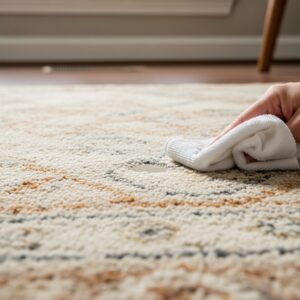
If you are dealing with a fresh spill, the first job is not cleaning. It is blotting. Use a clean white cloth or plain white paper towels and press gently to absorb as much of the spill as possible. Work from the outside of the spot toward the center so the stain does not spread into clean fibers. Keep switching to a clean part of the cloth as moisture transfers.
Do not scrub the rug. Wool fibers can fuzz, distort, or start to look worn if they are rubbed too aggressively. Scrubbing also increases the chance of pushing the spill deeper into the rug or disturbing the dye. The safer move is always controlled blotting with light pressure.
This simple habit protects the rug in two ways. First, it removes a lot of the mess before any product is added. Second, it reduces the temptation to overreact with harsh chemistry or too much water. In many cases, quick blotting makes the later cleaning step much smaller and much safer.
Before applying any cleaning solution to a wool rug, test it in a hidden corner, under a piece of furniture, or another inconspicuous area. Use a white cloth with a very small amount of the product and blot lightly. Then check the cloth for dye transfer and inspect the rug once the area starts drying.
This step is not optional with wool. Some rugs look stable until moisture hits them. Others may not show immediate bleeding, but subtle color movement can still happen if the solution is too strong or if the rug becomes too wet. The IICRC’s consumer guidance is especially helpful here because it warns that certain stain-removal products are not recommended for wool or other natural fibers without extensive testing for possible color loss.
A quick test can save the whole rug. If you see any color transfer at all, stop and do not continue with the same method. At that point, the best next move may be professional area rug cleaning instead of more trial and error.
Once you have tested the rug and removed as much dry soil or fresh spill material as possible, start with the gentlest effective method. Do not pour cleaner directly onto the rug. Apply a small amount to a cloth first, then blot the affected area lightly. Keep the moisture level low and controlled.
This is where wool rug care often goes wrong at home. People assume a deeper soaking means a deeper clean. In reality, overwetting a wool rug can create a much bigger problem than the stain itself. Excess moisture can affect dyes, slow the drying process, and leave the rug feeling heavy or uneven as it dries. Safe-Dry’s broader cleaning philosophy is centered on low-moisture, fast-drying, residue-free results, and that kind of thinking is a much safer fit for wool than saturating the rug and hoping it dries correctly later.
Once you start cleaning the stained or dull area, always work from the outer edge toward the center. This helps keep the problem contained instead of spreading it farther into the rug. With wool, this matters even more because the fibers can react badly to rough handling. A small stain can turn into a larger patch of stress if the area gets overworked.
Use a clean white cloth and blot in short, controlled passes. Avoid twisting the cloth into the rug or rubbing back and forth. Wool fibers can start to fuzz, flatten, or lose their natural texture when they are treated too aggressively. Even if you feel like you are making faster progress by scrubbing harder, the damage often shows up later once the rug dries.
This slow approach is one of the main reasons area rug cleaning for wool should never feel rushed. The goal is not only to lift the stain. The goal is to protect the look and feel of the rug while you do it. In a Katy home where a wool rug may be one of the nicest pieces in the room, keeping the cleaning controlled is part of protecting the investment.
After the stain begins to lift, the next step is to remove leftover cleaning solution from the fibers. This is where a lot of homeowners make a second mistake. They either skip rinsing entirely and leave residue in the rug, or they over-rinse and turn a small spot-cleaning job into an overwetting problem.
With wool, a light rinse is the safer move. Dampen a clean white cloth with a small amount of clean water and blot the treated area gently. Do not pour water directly onto the rug. You are not trying to wash the entire section. You are simply trying to pick up any leftover cleaner so the fibers do not dry stiff or attract fresh dirt too quickly.
Follow that immediately with a dry towel or cloth and press firmly to pull out as much moisture as possible. This helps the rug feel cleaner, dry faster, and avoid the sticky or crunchy texture that can happen when cleaner stays behind. A residue-free result matters because wool can hold onto whatever is left in the fibers long after the spot looks clean on the surface.
Drying is a major part of cleaning a wool rug without damage. A rug that stays damp too long can develop odor, texture changes, color movement, or that frustrating problem where the stain seems to return as the fibers dry. Fast, even drying helps reduce all of those risks.
Start by pressing dry towels into the cleaned area until they stop picking up much moisture. Then improve airflow in the room with fans or open air movement. Keep the rug flat and let the area dry naturally with steady circulation. Avoid intense direct heat, because wool does not respond well to harsh drying methods. You want controlled airflow, not a blast of heat that stresses the fibers.
This quick-drying mindset is one reason so many homeowners prefer a lower-moisture approach for area rug cleaning. Safe-Dry’s overall cleaning system is built around minimal moisture and faster dry times, which aligns well with the needs of delicate rugs and with the convenience families want at home.
If your wool rug still feels damp deeper down, if the cleaned section is larger than expected, or if you want help before the fibers get overworked, professional area rug cleaning in Katy, Texas may be the better next step. Safe-Dry’s Katy page highlights low-moisture, fast-drying cleaning designed for carpets, rugs, and upholstery in the area.
A wool rug should always be evaluated after it dries, not just while it is still damp. Damp fibers can hide a lot. A spot may look clean at first, then show a faint ring, color shift, or returning stain once the area has fully dried. This is why the recheck step matters so much.
Look at the rug in natural light if possible. Check whether the cleaned spot blends into the surrounding wool or whether it stands out in texture or tone. Touch the area gently. If it feels stiff, sticky, or rougher than the rest of the rug, some residue may still be present. If the stain is lighter but not fully gone, it is often safer to repeat the same mild process once more rather than jump to a stronger product.
This step helps you stay patient and avoid overcorrecting. Wool usually responds better to two careful passes than one aggressive attempt. It is much easier to do a second gentle cleaning than to reverse damage from too much scrubbing or too much moisture.
Some wool rug issues are simply too risky to keep treating at home. If the rug is heavily soiled, richly dyed, handmade, vintage, or showing any sign of color movement, that is a strong sign to stop before the damage gets worse. The same is true if the rug still feels wet deep below the surface, if odor is trapped in the fibers, or if the stain keeps returning after careful treatment.
Knowing when to stop is part of caring for a wool rug correctly. The goal is not to prove you can remove every stain yourself. The goal is to protect the rug. A professional area rug cleaning service makes more sense when the rug needs a full reset, when the fiber is especially delicate, or when repeated home efforts are starting to make the rug look uneven.
This is often the smartest move for Katy homeowners who want to protect the appearance of an important rug while still getting a real clean. Sometimes the best decision is not doing more. It is handing the rug over to a safer, more controlled process.

One of the biggest benefits of proper area rug cleaning is that it protects the natural feel of wool. Wool rugs do not just add color to a room. They add texture, softness, and a certain richness that synthetic rugs often do not match in quite the same way. When a wool rug is cleaned correctly, that texture stays more consistent and comfortable underfoot.
This matters because bad cleaning can change the way a wool rug feels even if the stain itself improves. Rough scrubbing, overwetting, or heavy product use can leave fibers stiff, fuzzy, or flattened. Once that happens, the rug may never feel the same again. Good area rug cleaning avoids that problem by respecting the fiber instead of overpowering it.
For homeowners in Katy, this benefit matters in real daily use. A wool rug that keeps its original texture continues doing what it was meant to do. It softens the room, feels good underfoot, and still looks like a quality piece instead of a stressed one.
Wool rugs often carry rich color and detailed patterning, which is one reason people love them so much. Proper area rug cleaning helps protect that visual character. When stains are treated carefully, moisture is controlled, and the rug is dried correctly, there is less risk of color shift, bleeding, or faded patches where the cleanup happened.
That is a major benefit because a faded area can stand out even more than the original stain. People usually notice color imbalance before they notice a small bit of remaining soil. That is why cleaning wool correctly matters so much. It supports the look of the entire room, not just the one problem spot.
This is especially important in Katy homes where wool rugs may sit in open living spaces, under dining furniture, or in well-lit rooms where color is part of the design. A properly cleaned rug keeps doing its job visually instead of becoming the new thing that looks off in the room.
Vacuuming is important, but it only goes so far. Over time, wool rugs collect fine dust, tracked-in grit, body oils, food particles, and everyday buildup that settles deeper into the fibers. Even when a rug does not look obviously dirty from across the room, it can still be carrying enough hidden soil to affect the way it feels and how fresh the room seems.
Area rug cleaning helps remove that deeper layer of buildup. That makes the rug feel more refreshed overall, not just cleaner in one visible spot. The room often feels lighter afterward because one of its main soft surfaces is no longer holding onto months of accumulated grime.
This is one of the reasons professional-quality area rug cleaning can make such a visible difference even when homeowners thought the rug looked “mostly fine.” The cleaning does not just chase stains. It addresses the hidden buildup that daily maintenance leaves behind.
Wool rugs are often more than casual decor. They are an investment. Some are chosen carefully to match a room. Others are handed down, gifted, or picked for their quality and warmth. Proper area rug cleaning helps protect that investment by reducing the long-term wear caused by deep soil, residue, and repeated rough spot cleaning.
Dirt acts like abrasion over time. Every step on a dirty rug pushes grit deeper into the fibers. The longer it sits there, the more the rug wears down from normal use. By keeping the rug cleaner and avoiding damaging DIY methods, you help preserve its life and overall appearance.
This benefit matters practically and financially. Replacing a damaged wool rug is rarely cheap and often more frustrating than homeowners expect. Preserving the rug you already have is usually the better move.
A wool rug that has been cleaned properly becomes easier to care for between deeper cleanings. Vacuuming works better. Small spills are easier to catch. The rug feels more predictable because you are not dealing with leftover sticky residue or old traffic buildup every time something new happens.
This is one of the most useful benefits for busy families in Katy. You do not just want the rug to look better for one day. You want it to be easier to manage in normal daily life. A good deep cleaning gives you that reset point. After that, your regular care routine has a cleaner foundation to work from.
That can make a big difference in homes with kids, pets, or frequent activity around the rug. Instead of always reacting to the rug as a problem, you get to maintain it from a stronger starting point.
Wool rugs hold onto more than visible dirt. They also collect the small everyday things that affect how a room feels, like dust, tracked-in outdoor debris, crumbs, and lingering mess from busy family life. Area rug cleaning helps remove that buildup and can make the room feel noticeably fresher afterward.
This benefit matters because rugs sit right in the center of daily life. People walk on them, sit near them, and build their routines around them. When the rug is holding onto old mess, the whole room can feel less clean even if everything else has been wiped down and straightened up.
A cleaner wool rug supports a healthier-feeling home rhythm. It is one of those improvements people often notice right away even if they did not expect it to be such a big part of the room’s feel.
Cleaning a wool rug without damaging it can feel intimidating. Many homeowners worry that one wrong move will ruin the fibers or cause permanent fading. That stress often leads to hesitation, over-cleaning, or trying too many products too quickly. A more careful area rug cleaning approach reduces that stress because it replaces guessing with a safer process.
This benefit is not just emotional. It also saves time and protects the rug. When you know how to respond to stains calmly, how to keep moisture low, and when to stop before causing damage, the whole cleaning process becomes more manageable.
For many Katy homeowners, that confidence is a big part of the value. Wool rug care does not have to feel like a gamble. With the right process, it becomes something you can approach with much more control.
Families want their rugs clean, but they also want the process to make sense for real life. Area rug cleaning should not turn the room into a harsh chemical space or leave the rug wet for an unreasonable amount of time. A practical, family-safe cleaning approach fits better with how people actually live.
That is one reason Safe-Dry’s low-moisture and residue-free philosophy resonates with so many homeowners. The company emphasizes minimal detergent, minimal moisture, and fast, convenient drying for homes in Katy and the surrounding Houston area.
One of the best ways to protect a wool rug is also one of the most basic: keep dry soil from building up in the first place. Dust, sand, crumbs, pet hair, and tracked-in debris settle into wool fibers faster than many homeowners realize. Once that dirt gets pressed down by regular foot traffic, it becomes harder to remove and more likely to wear on the fibers over time.
The key with wool is not only vacuuming often. It is vacuuming correctly. Wool fibers can be strong, but they do not always respond well to rough agitation. If your vacuum has an aggressive beater bar, test carefully or switch to a gentler setting if the rug seems sensitive. Some wool rugs do better with suction-focused passes rather than heavy brush action. You want to lift soil, not stress the yarn.
Move slowly instead of racing across the rug. High-traffic lanes, the space in front of seating, and the areas near entry points usually need the most attention. Edges and corners matter too because fine dust and dry debris collect there quietly and then get worked into the rug day after day.
This habit does more than keep the rug looking nicer. It also reduces how often you need to do spot cleaning later. A rug with less embedded dry soil tends to respond better when spills happen because you are not dealing with old residue and grit at the same time. For Katy homes with active family rooms, pets, and day-to-day traffic, regular gentle vacuuming is one of the smartest ways to protect both the look and the life of a wool rug.
Most rug damage during stain cleanup happens because people react too fast without a plan. They grab the nearest cleaner, use too much of it, scrub hard, and hope for the best. Wool rugs do better when the response is calm, simple, and controlled. That is why it helps to decide on your basic stain routine before the next spill happens.
A good routine starts with having a few clean white cloths or plain white paper towels ready. When a spill occurs, blot first and do not scrub. If needed, test any cleaning solution in a hidden area before using it on the spot itself. Use the mildest safe method first, keep the moisture low, and work from the outside edge toward the center.
What makes this tip valuable is not only the method. It is the mindset. Wool rug care should never feel like a panic response. It should feel measured. The faster you switch into that calmer process, the less likely you are to over-wet the rug, disturb the color, or create a larger problem around the original stain.
This is especially helpful in busy Katy households where accidents happen in the middle of everything else. Drinks spill during dinner. Kids drop snacks. Pets come in from outside. When you already know what your first safe steps are, you are much more likely to protect the rug successfully.
Cleaning is not the only thing that affects a wool rug. The environment around the rug matters too. Direct sun, strong heat, and uneven room conditions can all influence how the rug looks and wears over time. Many people think about fading only when a stain appears, but sunlight can quietly bleach a rug section little by little until the color imbalance becomes obvious.
If a wool rug sits near large windows or glass doors, consider rotating it from time to time so one section does not take all the exposure. This can help the rug age more evenly and keep one side from looking brighter or more worn than the rest. In Katy homes with strong daylight and open living areas, this small habit can make a real difference.
Heat matters during cleanup too. After spot cleaning, airflow is helpful, but intense direct heat is not. Wool fibers do better with steady drying than with harsh blasts of heat that stress the yarn or create uneven drying patterns. Keeping the indoor environment balanced helps the rug recover more naturally after cleaning.
This tip is important because protecting a wool rug is not just about what happens during a spill. It is about everything that affects the rug between spills too. When the rug is protected from ongoing environmental stress, it tends to hold its color, texture, and overall appearance better over the long run.
A wool rug almost never wears evenly. Certain sections get more foot traffic, more furniture pressure, more sunlight, and more daily use than others. Over time, that imbalance can make one side of the rug look flatter, duller, or older than the rest. Rotating the rug on a regular basis can help spread that wear more evenly and preserve a more balanced appearance.
This matters a lot in living rooms, hallways, and bedrooms where people naturally walk the same path again and again. It also matters in dining rooms where chair movement and repeated spills often affect the same places. By rotating the rug, you help keep one section from becoming the “stressed zone” while the rest stays protected.
Rotation also gives you a chance to notice things you might otherwise miss. You may spot early edge wear, hidden dust under furniture, or sections where the rug is collecting more soil than expected. Catching those issues early usually makes them easier to manage.
For wool rugs, this kind of proactive care is valuable because it helps preserve the whole look of the piece. Spot cleaning always blends better when the rug has worn more evenly over time. And from a home-care standpoint, rotation is one of the easiest ways to support longer rug life without adding much work to your routine.
There comes a point when a wool rug needs more than vacuuming and careful spot treatment. You may notice the colors looking dull even after vacuuming, small stains becoming harder to lift, or the rug feeling less fresh overall. That usually means deeper soil, older residue, and everyday buildup have settled into the fibers. At that stage, the rug does not need more random DIY effort. It needs a reset.
This is one of the most important home-care habits for wool: do not wait until the rug feels impossible. Once the rug starts resisting every cleanup, homeowners often overcorrect. They try stronger products, use more moisture, or repeat spot cleaning too many times in the same areas. That is when fading, texture change, and uneven appearance become much more likely.
A deeper area rug cleaning helps remove what routine care can no longer handle well. It gives the wool fibers a cleaner starting point so that regular vacuuming and light home maintenance actually work again. For many Katy homeowners, this is the step that makes the biggest long-term difference because it stops the cycle of constant little cleanups that never fully solve the problem.
A reset is not about giving up on home care. It is about protecting the rug before frustration leads to damage. When done at the right time, it helps the wool rug stay easier to manage, easier to enjoy, and easier to keep beautiful.

Wool rugs deserve a different level of respect during cleaning. They are not just soft surfaces that happen to be on the floor. They are often one of the most intentional design pieces in the room. They add warmth, color, texture, and personality. That is why our approach is not just about getting a rug cleaner. It is about helping protect what makes the rug valuable in the first place.
Some cleaning methods focus only on attacking the visible problem. That can work against delicate fibers like wool. We take a more careful approach. We think about the rug’s condition, the type of fiber, the moisture level, the risk of residue, and the overall result after the rug dries. That bigger-picture mindset matters because a wool rug can look better for a few hours after aggressive cleaning and still come out damaged in the end.
For homeowners in Katy, that difference matters most when the rug is something they truly care about. Whether it anchors a living room, softens a bedroom, or completes a formal dining space, a wool rug needs cleaning that respects the whole piece.
A lot of families want a cleaner rug, but they also want the process to feel reasonable for the home. Rugs are close-contact surfaces. Kids sit on them. Pets lie on them. Family life happens on and around them every day. That is why our broader philosophy has always focused on a family-safe, practical approach to cleaning rather than a harsh one.
Safe-Dry emphasizes hypoallergenic, soap-free cleaning and a residue-free result, which fits especially well with rugs that are part of daily life in busy homes. A wool rug should not come out of cleaning feeling loaded with leftover product or like it needs days of recovery before the room feels normal again. The cleaning method should support the comfort of the home, not interfere with it.
That is one reason so many homeowners appreciate a more measured way of cleaning. They want the rug fresher, cleaner, and more manageable, but they do not want the process to create new stress. A family-safe mindset helps keep the focus where it belongs: on practical results that fit real living.
Wool does not do well with too much moisture. Overwetting is one of the fastest ways to create extra problems, including slow drying, odor, dye movement, and uneven texture. That is why our quick-drying mindset matters so much. Safe-Dry’s brand approach emphasizes using much less water than traditional steam cleaning methods and focusing on faster drying and lower moisture overall.
For wool rugs, that is more than a convenience feature. It is part of protecting the rug itself. The less excess moisture sitting in the fibers and backing, the better chance the rug has of drying evenly and keeping its intended look. That also makes the experience easier for the homeowner. Families do not want to block off a room forever or wonder if the rug still feels damp underneath.
In Katy homes, where schedules are busy and rooms need to stay usable, faster dry times matter. But with wool, the benefit goes even deeper than convenience. A lower-moisture process helps reduce some of the very risks homeowners worry about most when cleaning a delicate rug.
One reason some rugs seem to get dirty again too quickly is residue. If cleaner stays behind in the fibers, it can attract new soil faster and leave the rug feeling stiff, sticky, or not fully refreshed. Safe-Dry’s broader philosophy places a lot of emphasis on residue-free results, and that is especially valuable for area rug cleaning.
With wool, this matters because the rug’s natural softness and texture are part of its appeal. A rug may look better right after cleaning simply because it is damp, but once it dries, leftover product can make the cleaned area stand out or feel off compared to the rest of the piece. That is not the result homeowners want.
We believe a good cleaning should hold up after the rug dries. It should leave the wool feeling fresher, not coated. It should make the rug easier to care for afterward, not more likely to grab dirt again. That kind of longer-lasting result is what makes area rug cleaning feel worthwhile instead of temporary.
At the end of the day, we know homeowners are not booking area rug cleaning just for the fibers. They are doing it because they want the room to feel better. They want the rug to stop dragging down the space. They want less stress, less guesswork, and a better sense that their home is clean and comfortable again.
That is why convenience, communication, and practicality are part of the difference too. A wool rug cleaning service should not feel disconnected from the way the home actually functions. It should respect that families have routines, pets, kids, furniture layouts, and limited time to deal with a drawn-out cleaning process.
For Katy homeowners, that means a service experience built around real life, not just a technical cleaning step. We aim to make the process feel easier, safer, and more worthwhile from start to finish. That is what turns area rug cleaning from a stressful task into a smart part of caring for the home.
The right schedule depends on where the rug sits and how much daily use it gets. In many Katy homes, a wool rug in a living room, entryway, dining room, or family space sees enough traffic to benefit from professional area rug cleaning about every 12 to 18 months. If the home has pets, children, allergies, or frequent guests, the rug may need attention sooner.
That does not mean you should wait until the rug looks obviously dirty. Wool can hold a lot of soil deep in the fibers before the buildup becomes easy to see. By the time the colors start looking dull or the rug begins feeling heavy and tired, a lot of dry debris, residue, and everyday grime may already be sitting in the pile. Regular professional cleaning helps remove that hidden buildup before it starts wearing on the fibers.
A less-used wool rug in a guest room or formal space may go longer between deep cleanings, especially if it is vacuumed gently and protected from spills. The goal is not cleaning on a rigid calendar. The goal is preserving the rug’s condition over time.
A good rule is to watch how the rug responds to normal care. If vacuuming no longer freshens it much, small spots are getting harder to manage, or the rug feels less clean overall, it is probably time for a professional reset.
Yes, but only if it is done carefully. Wool rugs can handle light, controlled spot cleaning when a spill happens, especially if you respond quickly. The safest home approach is to blot the spill right away with a clean white cloth, avoid scrubbing, test any cleaner in a hidden area first, and keep moisture to a minimum. Those steps help protect both the fibers and the dye.
What makes wool different is how easily it can react to bad cleaning habits. Too much water, the wrong product, or rough agitation can lead to color movement, texture changes, fuzzing, or a spot that looks worse after it dries. That is why home spot cleaning should stay small and controlled. Think of it as first aid for the rug, not a full deep-cleaning project.
Spot cleaning is most appropriate when the spill is fresh and limited to a small area. If the rug is heavily soiled, richly dyed, handmade, older, or made from especially delicate wool, it is wise to be even more cautious. The same goes for any stain that seems to spread, linger, or react badly during testing.
So yes, light spot cleaning at home can be safe. It just works best when you know where to stop. Protecting the rug is always more important than forcing a result.
The biggest mistake is usually using too much force, too much moisture, or too much product too quickly. Many homeowners see a stain or dull area and assume the answer is stronger cleaning. With wool, that approach often causes more damage than the original problem. Scrubbing can rough up the fibers. Flooding the spot can move the dye or affect the backing. Strong cleaners can leave residue or change the color.
Another common mistake is skipping the color test. Some wool rugs look stable until moisture or cleaner touches them. Once color transfer starts, it can be hard or impossible to undo. Testing in a hidden area first is one of the simplest ways to avoid a much bigger issue.
People also underestimate drying. A wool rug that stays damp too long can develop odor, uneven texture, or that frustrating issue where the stain seems to come back after the spot dries. Quick, even drying matters just as much as the cleaning step itself.
In most cases, the real mistake is treating wool like a basic synthetic rug. Wool needs a slower, gentler, more controlled method. Once homeowners understand that, they usually make much better cleaning decisions and protect the rug far more successfully.
Yes, area rug cleaning can help with pet stains on wool rugs, but the response needs to be careful. Pet accidents often involve more than a visible spot. Moisture can move below the surface, settle into the fibers, and sometimes affect the backing or leave odor behind. With wool, that creates an extra challenge because the fiber is more sensitive to overwetting and harsh treatment.
If the accident is fresh, blotting immediately is the best first step. Remove as much moisture as possible without scrubbing. From there, any further treatment should stay mild, tested, and low-moisture. The goal is to reduce the stain without pushing liquid deeper into the rug or causing color loss.
Professional area rug cleaning is especially helpful when the accident is larger, older, or still smells after careful home treatment. It is also the smarter choice when the rug is valuable, richly colored, handmade, or already showing signs that the wool is reacting badly to cleanup attempts. Repeated home spot cleaning can sometimes make pet problems worse by spreading the moisture or stressing the fibers.
So yes, professional help can make a real difference. It can address not just what you see on the surface, but the deeper mess that often makes pet stains so frustrating to fully solve on a wool rug.
It can, if the cleaning is done incorrectly. Wool is a natural fiber, and it does not respond well to overwetting, harsh chemistry, or rough agitation. If too much water is used, if the rug dries unevenly, or if the fibers are overworked during spot cleaning, the rug may end up feeling different afterward. That can show up as stiffness, roughness, a slightly distorted look, or in some cases shrinkage-related issues depending on the rug’s structure and how it was handled.
The good news is that careful area rug cleaning is meant to avoid those problems. Low-moisture methods, residue-free thinking, and controlled drying all help protect the rug’s original softness and shape. That is one reason wool rugs benefit from a more measured approach than many homeowners expect. The goal is not just to remove dirt. It is to preserve the qualities that make the rug worth having.
If your wool rug already feels stiff after a DIY cleanup, that may mean residue was left behind or too much product was used. If it feels misshapen or heavier in one area, too much moisture may have been part of the problem.
A properly handled cleaning should help the rug feel fresher, not harsher. That is why gentle technique matters so much with wool.
Vacuuming is important, but it only removes part of the problem. A wool rug can still look dull after vacuuming because deeper soil, residue, body oils, and everyday buildup are sitting below the surface. Over time, those materials coat the fibers and make the rug look flatter, darker, or less vibrant even if you are keeping up with normal dry debris removal.
Another possibility is residue from old spot-cleaning attempts. If a rug has been treated several times with too much cleaner or too much water, the fibers may be holding onto leftover product that attracts fresh dirt faster. In that case, the rug may never quite look bright no matter how often you vacuum.
Light exposure and uneven wear can also contribute. One section may be getting more foot traffic or more sunlight than the rest, which makes the rug look tired in ways vacuuming alone cannot fix.
This is where deeper area rug cleaning becomes valuable. It addresses what routine maintenance leaves behind. Instead of only removing surface dust, it helps clear out the deeper grime and residue that are affecting the rug’s overall appearance. Once that reset happens, vacuuming starts making a more visible difference again and the rug feels easier to maintain.
You should stop when the risk to the rug starts getting higher than the likely benefit. If you have already blotted carefully, tested a mild cleaner, kept moisture low, and still are not seeing safe progress, it is probably time to stop. The same is true if you notice color transfer, lingering dampness, roughened fibers, a spreading ring around the stain, or a spot that keeps returning after it dries.
Some wool rugs deserve even more caution from the beginning. Handmade rugs, vintage rugs, richly dyed rugs, heirloom pieces, and larger room-size wool rugs are all better candidates for professional attention once the issue goes beyond a tiny fresh spill. Those rugs are usually far more costly to damage than they are to clean professionally.
You should also call for help if the rug has general soil buildup, odor, multiple stains, or areas that look dull even after regular vacuuming. At that point, the rug likely needs a deeper reset rather than one more spot-cleaning attempt.
Stopping early is not giving up. It is part of good rug care. In many cases, the smartest thing you can do for a wool rug is recognize when the next DIY step is more likely to create fading or texture damage than solve the original problem.
Cleaning a wool rug without damage takes patience, restraint, and the right method. The biggest win is not just removing dirt or treating a stain. It is doing that while protecting the color, softness, and structure that make a wool rug special in the first place. When you slow down, test first, control moisture, and avoid harsh shortcuts, you give the rug a much better chance of staying beautiful long after the cleaning is done.
Here in Katy, Texas, wool rugs deal with everyday family life just like any other soft surface in the home. They catch dust, hold onto dry soil, pick up spills, and take on steady wear in the rooms people use the most. That is why thoughtful area rug cleaning matters so much. It helps preserve the look of the rug, supports a fresher-feeling room, and keeps regular home care from turning into a cycle of stressful trial and error.
If your wool rug is looking dull, reacting badly to spot cleaning, holding onto odor, or showing signs that the stain is deeper than a light home cleanup can handle, this is a good time to act before the fibers get overworked. A professional reset can often protect the rug better than repeated DIY efforts, especially when you are trying to avoid fading, stiffness, or moisture-related problems.
When you are ready for a safer, more careful approach, contact Safe-Dry Carpet Cleaning of Katy, Texas. We are here to help you protect your wool rug, refresh the fibers, and bring back that cleaner-home feeling with professional area rug cleaning designed for real homes and real routines. Book your service today and let your wool rug get the deeper clean it deserves without the damage you are trying to avoid.